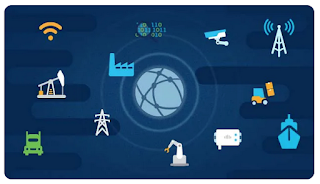
Industrial IoT is an ecosystem of devices, sensors, applications, and associated networking equipment that work together to collect, monitor, and analyze data from industrial operations. Analysis of such data helps increase visibility and enhances troubleshooting and maintenance capabilities. It can also increase efficiencies, reduce costs, and improve safety and security.
Why should organizations consider adopting industrial IoT?
Industrial IoT enables organizations to get a wealth of actionable data from their operations. When properly aggregated and analyzed, the data helps them better control operations, with the potential to:
- Improve worker safety
- Increase production uptime by predictive maintenance of machinery
- Maintain product quality
- Help ensure regulatory compliance
- Improve operational efficiencies
- Accelerate response times with real-time collection and processing of operational data
How is industrial IoT different from other types of IoT?
IIoT connects machines and devices in industries such as manufacturing, transportation, oil and gas, power generation and transmission, mines, and ports. Commercial, enterprise, or consumer IoT—also simply known as IoT—is used to describe connected devices within homes and office spaces, such as cameras, badge readers, and HVAC control systems.
Failure of IIoT can have catastrophic consequences, creating high risk and potentially life-threatening situations. Downtime of other IoT devices may result in inconveniences, but it does not usually cause emergency situations.
The role of IT in industrial IoT
IIoT malfunctions can have a major impact on operations, ranging from production downtime to compromising worker safety or damaging the environment. IIoT installations benefit from rigorous IT processes, tools, and best practices. IT can scale and secure IIoT deployments to help ensure success.
A reliable network
Organizations rely more and more on the quantity and quality of data they get from their operations. IT must strive to ensure that a reliable network with sufficient bandwidth capacity is in place so time-sensitive data can be transmitted without delay to applications in data centers or the cloud.
The network that connects IIoT devices and sensors needs to support diverse physical channels. For example, although Ethernet cables may connect devices commonly found on the factory floor, wireless technologies such as 5G, 4G LTE, NFC, RFID, Bluetooth, NB-IOT, LoRaWAN, and Wi-SUN may also be required for connectivity.
Intelligent network control
The network for IIoT must be kept highly available. IIoT devices may be numerous and spread across a large geographical area, but a network controller can automate networking equipment deployment and keep configurations consistent, and firmware updated. It can also help ensure that devices are performing to expectations—and guide administrators to take corrective actions if not. Network controllers that have served IT well in the past could serve IIoT equally well.
Security for critical resources
As IT and IIoT networks converge, security practices must also converge. Protecting IIoT is best done with a comprehensive, integrated security solution rather than a multitude of point products. The same proven security tools that IT has deployed over the years can benefit IIoT as well.
These skill operations are what major employers are looking for. Global IT has a certified training program that meets these needs. Are you ready to catapult your skills to next level and earn more income? Contact us today at (248) 557-2480 to speak with a Career Counselor who can help you see if this career is a great fit for you, or to upgrade your current skills.
.svg)

.svg)